How to Tell if Fur Is Real: 7 Expert Tests
A real fur coat reveals itself the moment you touch it, yet modern faux fur has become convincing enough to fool the eye. Knowing how to tell if fur is real protects your money and your investment. Below are the practical, atelier-level tests you can run on any coat before you buy, with the signs that never lie.
Check the backing: the single most reliable test
In genuine fur, every hair grows from a supple leather hide. Part the fur down to its base and you will see soft, slightly stretchy, natural leather skin. In faux fur, the hairs are sewn or knitted onto a fabric base, so the roots sit on a woven mesh or flat textile. Looking at what lies beneath the hair is the most dependable check of all.
- Real: leather backing, gives a little when stretched, hairs embedded individually.
- Faux: fabric backing, visible knit rows or mesh, hairs spaced in even machine lines.
Guard hairs and underfur: two textures together
Natural fur has two layers: long, glossy guard hairs that taper to a fine point, over a dense, soft underfur. Roll the fur between your fingers and you will feel different lengths and thicknesses at once. Faux fur is usually uniform: every fiber the same length, the same diameter, with blunt, machine-cut tips rather than naturally tapered ends.
The blow test: expose the underfur
Gently blow into the fur from up close. Genuine fur parts easily and reveals a dense, fluffy layer of fine underfur beneath the guard hairs, the insulation nature designed. Faux fur tends to move as one sheet and shows no soft second layer underneath; you see the fabric base directly.
Feel and warmth
Real fur slides silkily across your palm, flows between your fingers, and warms quickly to your skin thanks to its natural oils. It feels alive and supple. Faux fur often feels drier, sometimes slightly plasticky, and can build static; even after holding it a while, it never delivers that deep, even warmth.
The pin test
Push a pin or needle into the backing. It enters genuine leather backing with resistance, because real hide is dense. In faux fur, the needle slides through the fabric base with almost no resistance at all. It is a quick way to confirm whether the backing is leather.
The burn test: use a single loose hair only
Do this only with a few hairs that have shed loose, in a safe place, and never on the coat itself. A real fur hair, like human hair, curls as it burns, smells of singed hair, and leaves a crumbly ash. Synthetic faux-fur fibers melt and clump instead, smell like burning plastic, and harden into a small bead at the tip. The smell and residue give the material away almost every time.
Sheen, movement and price logic
Natural fur catches light with a soft, layered, shifting luster, throwing different tones from every angle. Faux fur often looks flat, either too shiny or too matte. Worn on the body, real fur has weight that creates a natural drape and sway. Finally, price: genuine fur cannot drop below a real cost floor set by raw material and handwork. A suspiciously cheap "fur" is almost always faux. This is why "Russian sable" and full-pelt mink command the prices they do.
Transparency and trust
When you invest in a fur coat, honest disclosure of the material is your strongest protection. LC Leather Club, an Istanbul atelier crafting genuine leather, real fur and cashmere since 1985, treats transparency about every material as a matter of principle. With more than forty years of handwork and made-to-measure tailoring, each piece is built to pass every test above with ease. A knowing eye always distinguishes the real thing, and this guide exists to give you exactly that eye.
Featured Pieces
Related Guides
Related Collections
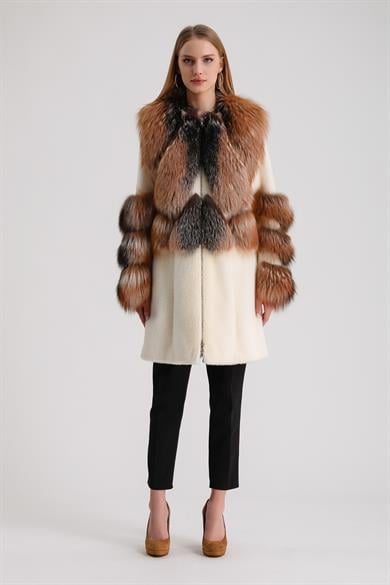
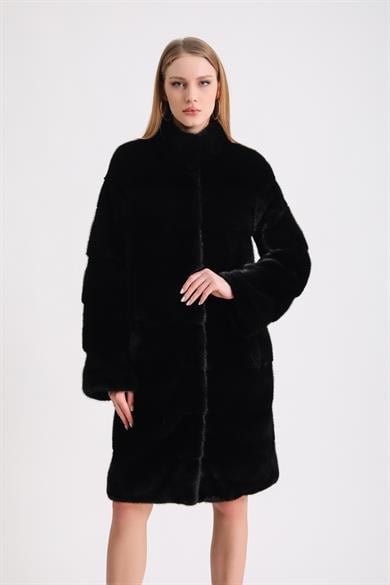
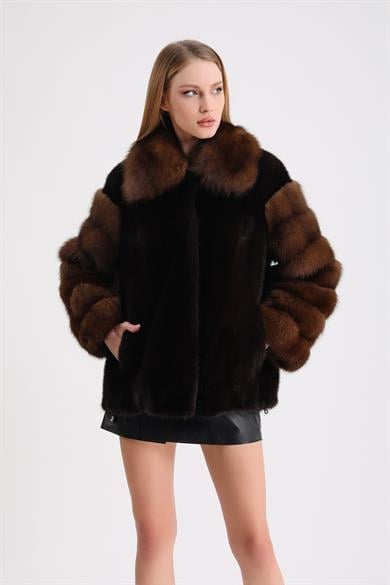
Fur Coats Mink Fur Coats & Jackets Sable Fur Coats Fox Fur Coats & Vests