Why Is My Leather Jacket Peeling?
Does leather peel? The short answer: genuine leather does not peel the way faux leather does. If the surface of your jacket is flaking off in sheets and fabric shows underneath, the garment is most likely PU (polyurethane) or bonded leather. On genuine leather, what looks like peeling is usually not the hide itself but the colour and finish layer on its surface. As an atelier that has worked leather since 1985, we explain honestly in this guide why jackets peel, how to tell real leather, how to prevent damage and what can and cannot be repaired.
Why is my leather jacket peeling?
Most peeling complaints come from one of three materials:
- PU (faux) leather: a plastic coating spread over a fabric backing. Over time the coating dries out, loses its flexibility and separates from the backing. The result is classic peeling: the surface lifts in flakes and white or grey fabric appears beneath.
- Bonded leather: made from leather scraps ground up, pressed with adhesive and coated with polyurethane. It carries the word "leather", but its surface is a coating and it peels just like PU.
- A damaged finish on genuine leather: some hides receive a pigmented finish for colour and protection. That layer can crack or lift in small pieces through drying, heat, solvents or friction. Beneath it sits fibrous, sound leather; the hide itself does not come apart in layers.
Is a peeling jacket real leather?
A close look at the damaged area usually gives the answer. If you see woven or knitted fabric under the lifted layer, the garment is faux leather. If there is a fibrous, suede-like surface underneath, it is genuine leather with a damaged finish. To be sure before you buy, read how to spot real leather, where we cover grain, smell, cut edges and feel.
On our side the answer is simple: every leather piece we sell is genuine leather, and we do not sell faux leather. All of our women's leather jackets and men's leather jackets are made from lamb leather.
What makes the finish on genuine leather crack?
- Drying out: leather slowly loses the oils it received in tanning. Dry leather stiffens, and the finish on it loses flexibility and starts to show fine cracks.
- Heat: radiators, heaters, hairdryers or a car parked in the sun dry leather fast. Drying a wet jacket with heat is the most common mistake.
- Solvents: alcohol, acetone, household cleaners, wet wipes and perfume sprayed directly on the leather can dissolve the finish.
- Friction: cuffs, collar, pocket edges and the shoulder under a bag strap wear the most.
- Poor storage: plastic bags trap moisture, and thin wire hangers put a permanent crease in the shoulders.
How to prevent peeling and cracking
- Condition the leather a few times a year, whenever it looks dull, with a thin coat of colourless leather conditioner; test on a hidden spot first.
- Blot a wet jacket gently with a cloth and let it dry on its own at room temperature.
- Clean only with a soft, slightly damp cloth and keep away from anything containing solvents.
- Apply perfume before you put the jacket on and let it dry.
- Store it on a broad-shouldered hanger, in a breathable cover, in a cool wardrobe.
The full routine is in our leather jacket care and cleaning guide. Suede needs different care; see suede care and cleaning.
Do not confuse patina with damage
Not every change is a problem. Genuine leather softens over time, fine creases form where it folds most, the colour deepens slightly and a natural sheen appears at the cuffs. This is patina, and it is part of the leather's character. Damage shows itself differently: whitening of the surface, colour that rubs off like powder, stiff areas that break, or a finish that lifts. Patina needs no treatment; damage is easier to put right the earlier it is noticed.
Can a peeling leather jacket be repaired?
It depends on the material:
- Finish cracks on genuine leather: in most cases a professional leather restorer can clean, condition and refinish the surface to bring it back. Fine cracks treated early give the best result.
- Tears or deep wear in the hide itself: small areas can be repaired; extensive damage may need a panel replaced. A craftsman who sees the garment should make that call.
- Peeling PU and bonded leather: cannot truly be repaired. The lifted coating does not reattach; paints and fillers give a short-lived cosmetic fix, but the peeling usually continues.
Choosing for a long life
The way to avoid peeling from the start is to choose genuine leather and care for it properly. Real leather does not peel with age; it softens and develops a patina. We explain how price and quality relate in genuine leather jacket prices, and if standard sizes do not fit you, made-to-measure is available.
SSS
Does real leather peel?
Genuine leather does not come apart in sheets the way faux leather does. However, the pigmented finish on some hides can crack or lift in small pieces through drying, heat, solvents or friction. When that happens, sound fibrous leather is visible underneath.
Why is there fabric showing where my jacket is peeling?
If woven or knitted fabric appears under the lifted layer, the jacket is PU or bonded leather, in other words faux leather. On genuine leather, a lifted finish reveals a fibrous leather surface, not fabric.
How do you fix a peeling leather jacket?
On genuine leather, a cracked or lifting finish can often be cleaned, conditioned and refinished by a professional leather restorer. On PU and bonded leather the peeled coating does not reattach; paints and fillers only give a temporary cosmetic fix.
How do I stop my leather jacket from cracking?
Condition it a few times a year with a thin coat of colourless conditioner, never dry it with heat, keep it away from alcohol and solvents, do not spray perfume directly on it, and store it on a broad hanger in a breathable cover.
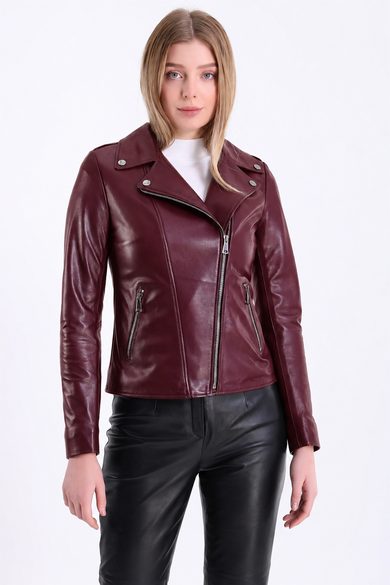
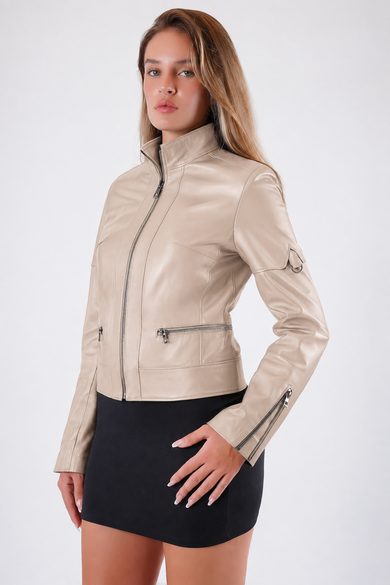
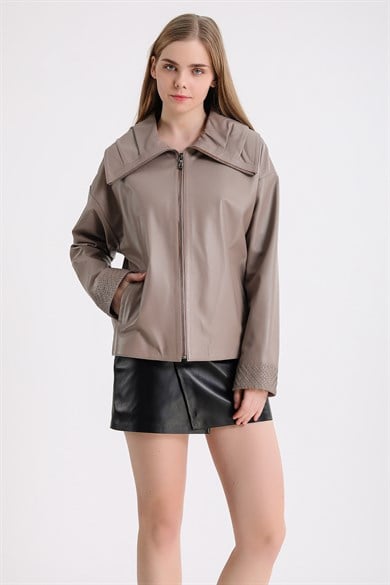
Collection highlights
Related Guides